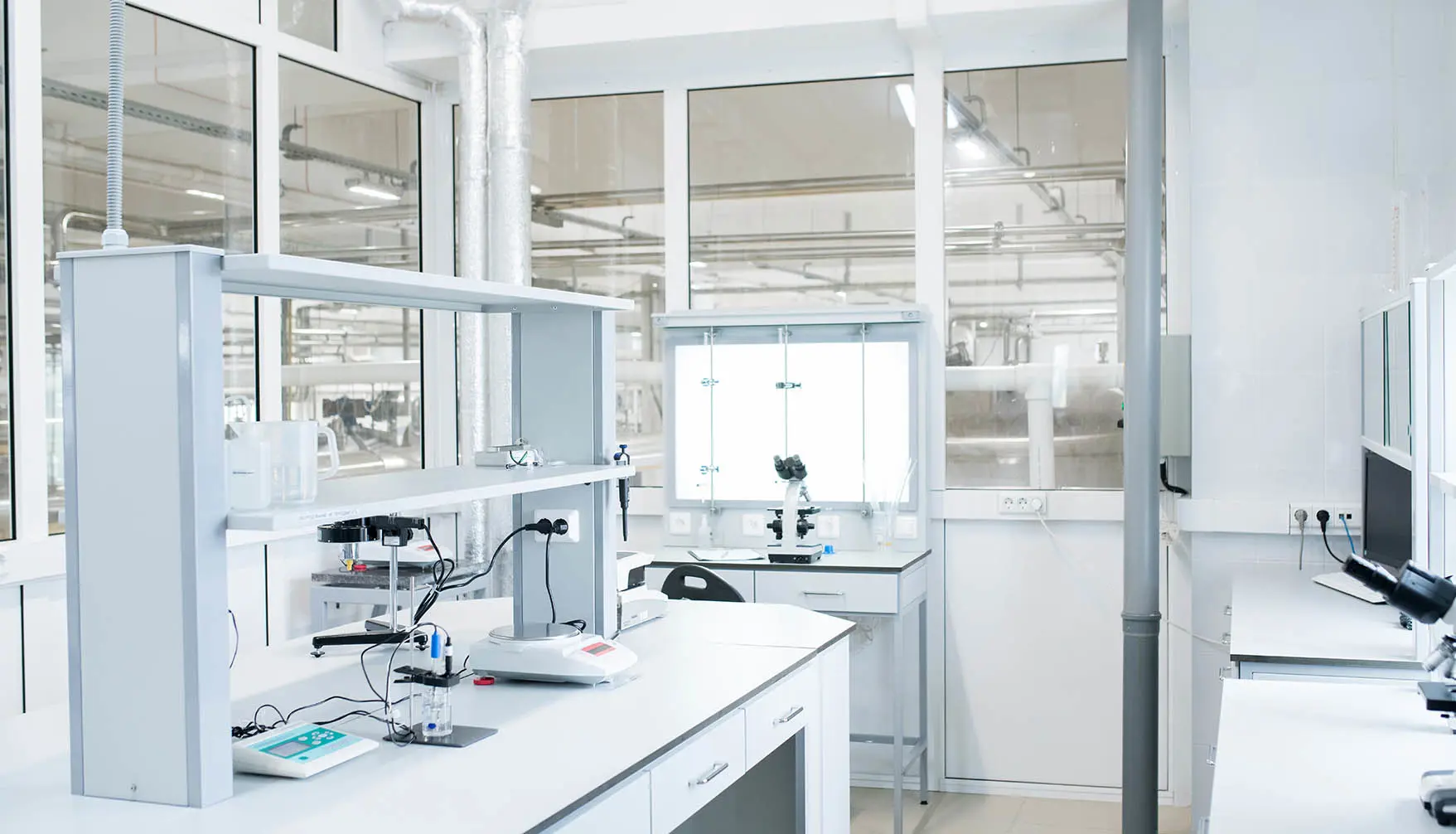
As Xiwang Filter, we provide comprehensive analysis and testing services with a modern laboratory infrastructure and expert staff to ensure product quality and maximize process efficiency. In our application and R&D laboratories, we evaluate every stage—from new product development to failure analysis of end-of-life filter media—using scientific methods, and in collaboration with BWF Distic, we deliver data-driven optimization solutions to our customers.
We analyze the chemical structure of filter media using FTIR spectroscopy to assess material compatibility with your process conditions and identify potential chemical degradation.
For filter media exposed to acidic, alkaline, or corrosive environments, we evaluate the degree of chemical attack and material resistance through wet chemistry testing.
By analyzing particle size, density, and adhesiveness of your process dust, we identify risks such as clogging, bridging, and blinding.
We measure air permeability, basis weight, and density of filter media to quantitatively assess their impact on differential pressure and energy consumption.
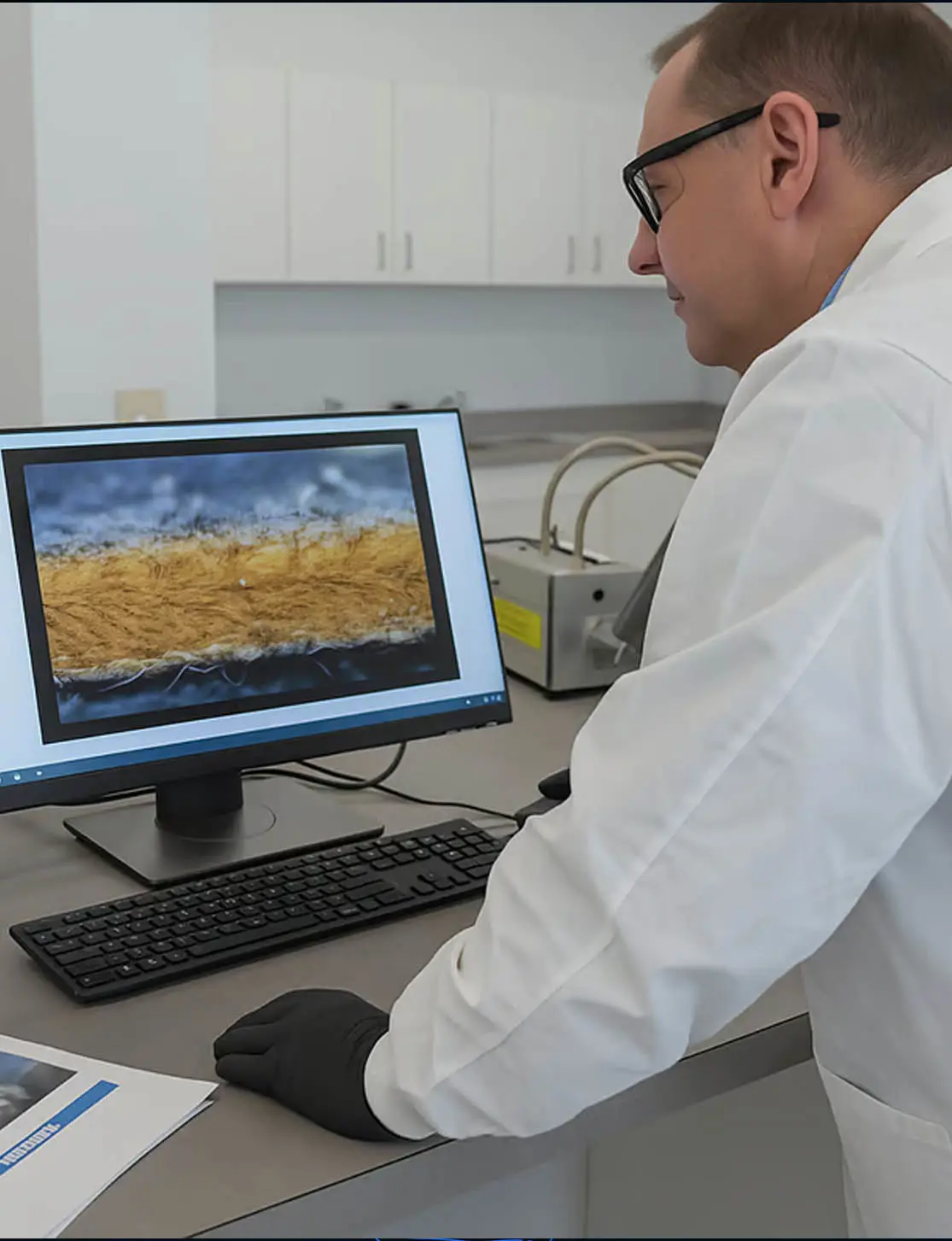
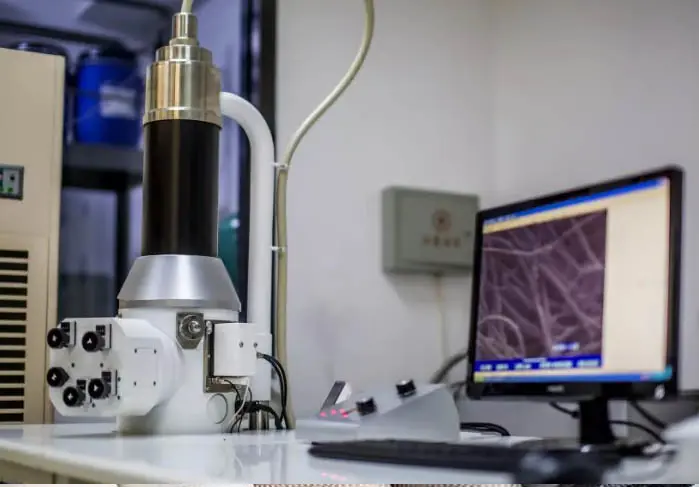
Through pore size distribution analysis and advanced microscopic imaging, we examine the pore structure of filter media, providing detailed insight into clogging tendencies and cleanability.
Using mechanical strength tests and electrostatic behavior measurements, we determine how well your filter bags withstand heavy industrial conditions.
We analyze structural and chemical degradation in end-of-life filter bags to scientifically identify the root causes of failure.
We evaluate overall filtration performance through particle size distribution, filter element functionality, and, where required, catalytic activity testing.